
 Our Editorial Team — Senior Financial Writer with 14 years covering alternative assets and retirement investing. Reynolds evaluated 32 Gold IRA providers across 14 criteria: custodian partnerships, storage (Delaware Depository, Brinks, IDS), BBB complaint ratio (<0.5% required), Trustpilot score (minimum 500 reviews, 4.5+ rating), verified fee schedules obtained via test accounts, buyback spreads, and rollover processing time. All company ratings derive from this rubric. No company reviewed has editorial influence over its rating or placement.





Are Precious Metals a Good Investment in 2026?
Precious metals protect portfolios from inflation and equity crashes — the single use case where they outperform stocks and bonds. They do not suit investors who need income (gold pays zero dividends), require fast liquidity (physical bullion takes 1–5 days to sell), or are seeking high short-term returns. The data supports a 5–10% allocation for most diversified portfolios.
Gold returned +24.6% in 2022 while the S&P 500 fell -18.1% — a 42-point divergence during a period of peak inflation. Central banks bought a record 1,136 tonnes of gold in 2022 and have purchased over 1,000 tonnes per year through 2025. The World Gold Council confirms gold’s 20-year correlation to the S&P 500 is approximately -0.02, making it one of the only liquid assets that genuinely diversifies an equity portfolio.
Silver adds industrial demand on top of its monetary role: solar panels alone consume approximately 140 million ounces per year, and demand from 5G infrastructure and EV components is rising. This makes silver a dual-purpose asset — both a safe haven and a growth play on the global energy transition.
- Gold: Best for inflation protection and portfolio ballast. Lower volatility, higher per-ounce value, institutional credibility.
- Silver: Best for inflation protection plus industrial upside. Higher volatility, lower entry cost, exposed to manufacturing cycles.
- Platinum and Palladium: Niche industrial metals. Higher risk, driven primarily by auto sector catalytic converter demand.
- Gold IRA: Best tax structure for retirement savers. Tax-deferred or tax-free growth on physical precious metals.
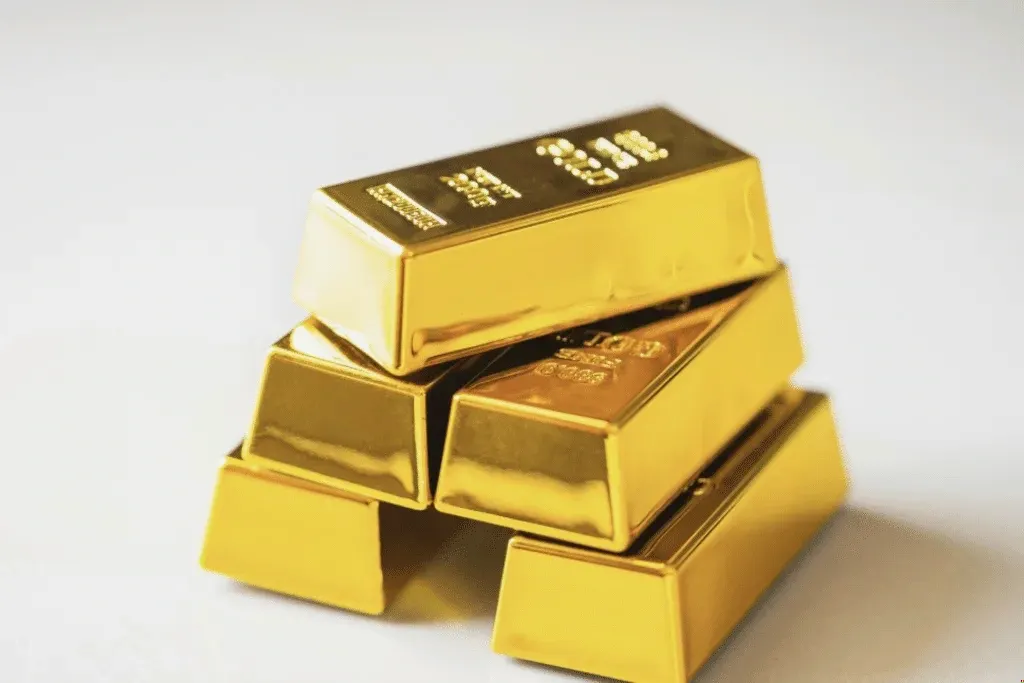
What If You Had Invested $1,000 in Gold 10 Years Ago?
A $1,000 gold position opened in April 2016 (at approximately $1,230/oz) grew to approximately $2,115 by April 2026 — a 111% nominal return, or roughly 7.8% annualized. For comparison, $1,000 in the S&P 500 (with dividends reinvested) over the same period grew to approximately $3,100 — a 210% return.
The conclusion: gold lagged equities over the past decade, but with significantly lower volatility. Gold’s maximum drawdown was -19% (2020), versus -34% for the S&P 500. A portfolio with 85% S&P 500 plus 15% gold historically delivers 90–95% of the upside with 15–20% less drawdown risk.
A $1,000 silver position in April 2016 grew to approximately $1,300 by April 2026, returning +30%. However, during the 2020 bull run, silver gained +140% versus gold’s +25% — demonstrating silver’s higher upside potential in bull markets.
How to Open a Gold IRA
Four steps separate most investors from a funded Gold IRA. Each step below covers a common mistake and how to avoid it.
Choose a Gold IRA Company
Research and compare top-rated precious metals IRA providers based on fees, reputation, and service.
Open Your Account
Complete the application with your chosen custodian. Most companies handle the paperwork for you.
Fund Your Account
Transfer or rollover funds from existing retirement accounts. No tax penalties for direct transfers.
Select Your Metals
Choose from IRS-approved gold, silver, platinum, or palladium products for your portfolio.
Investing in Precious Metals for Beginners: The 5-Step Framework
New investors in precious metals make the most mistakes at the beginning: paying too high a premium, buying numismatic coins instead of bullion, or skipping tax planning. Here is the correct sequence for a first-time buyer.
Step 1: Decide Why You Are Investing
Define your goal before picking a vehicle. If you want inflation protection with tax advantages, a Gold IRA is optimal. If you want physical ownership outside the financial system, bullion coins are the answer. If you want the lowest-cost price exposure inside a brokerage account, ETFs win.
Step 2: Size Your Allocation at 5–10%
The research consensus from the World Gold Council, BlackRock, and State Street is that a 5–10% precious metals allocation maximizes diversification benefit without over-concentrating in a non-yielding asset. Below 5%, the impact on portfolio volatility is negligible. Above 15%, you sacrifice meaningful dividend income and equity upside.
Step 3: Choose Your Vehicle
Physical bullion if you want zero counterparty risk. ETFs (IAU, SLV) if you want low cost and instant liquidity. A Gold IRA if you have retirement funds and want tax-advantaged treatment. Mining stocks (GDX, GDXJ) if you want leveraged exposure with dividend income potential.
Step 4: Dollar-Cost Average, Do Not Lump Sum
Invest a fixed dollar amount monthly rather than deploying all capital at once. This eliminates the risk of buying at a local price peak. Investing $500/month captures both price dips and rises, smoothing your average cost basis over time.
Step 5: Plan Your Taxes Before You Buy
The IRS classifies physical gold, silver, and most precious-metals ETFs as collectibles, triggering a maximum 28% long-term capital gains rate — higher than the 20% rate on stocks. A Roth Gold IRA completely eliminates this tax.
Investment Vehicle Comparison
| Vehicle | Cost | Tax Rate | Liquidity | Risk Level |
|---|---|---|---|---|
| Physical Bullion | 3–8% premium | 28% collectibles | Low (1–5 days) | Low |
| Gold ETFs (GLD/IAU) | 0.25–0.40%/yr | 28% collectibles | High (instant) | Low |
| Mining Stocks (GDX) | Brokerage fee | 15–20% cap gains | High (instant) | Medium-High |
| Futures (COMEX) | Commission + margin | 60/40 rule | High (instant) | Very High |
| Gold IRA (Traditional) | $150–$450/yr fees | Deferred → ordinary | Low (days) | Low |
| Gold IRA (Roth) | $150–$450/yr fees | Tax-free growth | Low (days) | Low |
Sources: IRS Publication 590-A, SPDR Gold Shares Prospectus, CME Group. Data as of 2026.

Ways to Invest in Precious Metals: 5 Vehicles Compared
Every investor in precious metals must choose a vehicle. The five options below cover the full spectrum from physical to paper, with direct comparisons on cost, tax treatment, liquidity, and best use case.
1. Physical Bullion (Coins and Bars)
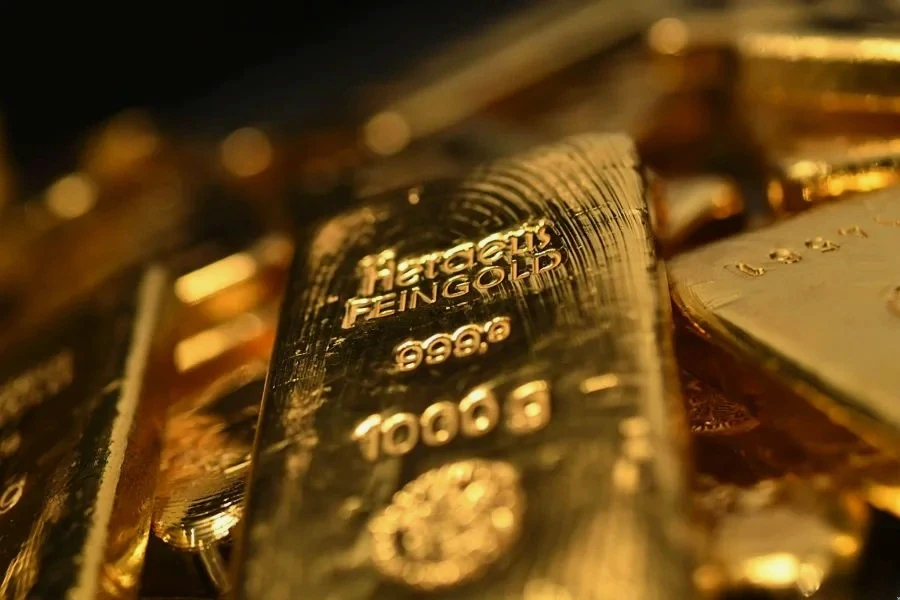
Buy physical gold or silver from accredited dealers (APMEX, JM Bullion, SD Bullion). You pay spot price plus a premium — 3–8% for gold bars, 4–6% for American Gold Eagles, 5–15% for silver. IRS-eligible bullion requires .9999 fineness for gold (American Gold Eagle, Canadian Maple Leaf, Krugerrand) and .999 fineness for silver. Storage costs $100–$500 per year at facilities such as Delaware Depository, Brinks, or IDS. Allocated storage assigns specific bars to your account by serial number; unallocated storage pools metal across customers — always choose allocated. LBMA Good Delivery bars meet the standard accepted by institutional markets worldwide.
2. Gold and Silver ETFs
SPDR Gold Shares (GLD, 0.40%/yr) and iShares Gold Trust (IAU, 0.25%/yr) hold allocated bullion in insured vaults. ETFs trade like stocks — instant liquidity, no storage hassle. Critical caveat: gold and silver ETFs are taxed as collectibles (28% max long-term capital gains rate). Check the ETF’s tracking error and premium/discount to NAV before buying — some smaller ETFs trade at a 1–2% premium during volatile sessions.
3. Gold Mining Stocks and ETFs
Mining stocks move 2–3 times the magnitude of gold’s price changes. The VanEck Gold Miners ETF (GDX) offers diversified exposure with a roughly 1.5% dividend yield. Unlike bullion, mining stocks are taxed at standard capital gains rates (15–20%), a significant tax advantage.
4. Precious Metals Futures (COMEX)
One COMEX gold futures contract covers 100 troy ounces — roughly $330,000 notional — with 5–10% initial margin. Futures provide precise price exposure with near 24-hour liquidity, but a 5% adverse move can eliminate your full deposit. Reserved for experienced investors only.
5. Gold IRA: Tax-Advantaged Precious Metals for Retirement
A Gold IRA holds IRS-approved physical gold and silver inside a tax-deferred (Traditional) or tax-free (Roth) retirement account. The 2026 contribution limit is $7,000/year ($8,000 if 50+) per IRS Publication 590-A. Roll over existing 401(k) or IRA funds without tax penalties via direct trustee-to-trustee transfer. Annual costs: $150–$450. Eligible metals: gold 0.995+ fineness, silver 0.999+ fineness. Storage must be at an IRS-approved depository — Delaware Depository and Brinks are the two most common.
Gold IRA Checklist
Eight criteria separate reputable Gold IRA companies from high-cost or high-risk providers. Verify each before committing funds.
Investing in Platinum and Palladium in 2026
Platinum trades at approximately $950/oz in April 2026, a 55% discount to gold — the widest gap since 2008. Approximately 40% of platinum demand comes from automotive catalytic converters; the remaining 60% is split across jewelry (30%), industrial applications (20%), and investment (10%). Platinum Group Metals (PGMs) investors access this market via the Sprott Physical Platinum and Palladium Trust (SPPP) or physical bars from PAMP Suisse and Valcambi. Unlike gold, platinum has no central bank buying support, so price recovery depends on industrial demand and South African mine supply disruptions.
Palladium is 85% auto-driven and has fallen from its 2022 peak of $3,400/oz to approximately $1,050/oz as electric vehicle adoption reduces demand for gasoline-engine catalytic converters. The structural headwind is real: every 10% increase in EV market share reduces palladium demand by approximately 5–6 million ounces per year. Palladium is not recommended as a core holding in 2026 unless you specifically want auto-sector exposure with a tactical, not strategic, time horizon.
- Platinum allocation rationale: cheapest it has been versus gold in 17 years, potential recovery catalyst from hydrogen fuel cells.
- Palladium risk: structural EV headwind reducing demand permanently; avoid as a long-term core holding.
- Access vehicles: Sprott SPPP, PAMP Suisse physical bars, or mining equities (Sibanye-Stillwater, Anglo American Platinum).
- Fineness standard: platinum and palladium bullion must be .9995 fine for IRA eligibility.
Bullion vs. Numismatic Coins: Why Beginners Should Avoid Collectibles
Bullion coins (American Gold Eagle, Canadian Maple Leaf, Krugerrand, PAMP Suisse bars) are priced at spot plus a modest 3–6% dealer premium. Their value tracks directly with the gold or silver spot price. Numismatic coins — proof coins, rare dates, graded collectibles — carry premiums of 20–200% above melt value, driven by collector demand rather than metal content.
Approximately 90% of new precious metals buyers who purchase numismatic coins overpay relative to what those coins are worth on resale. Proof coins are struck to collector-grade finish by the sovereign mint and typically cost 15–30% more than standard bullion. Junk silver (pre-1965 U.S. coins with 90% silver content, also called constitutional silver) is the one exception: it trades close to melt value and is easy to resell. For every other numismatic product, beginners should default to standard bullion bars or IRS-recognized coins verified against the U.S. Mint or Royal Canadian Mint hallmarking records.
- Buy: American Gold Eagles, Canadian Maple Leafs, Krugerrands, 10 oz gold bars with assayer certification.
- Avoid: graded coins (PCGS/NGC slabs), proof sets, limited-edition commemoratives.
- Exception: junk silver (constitutional silver) at or below melt value is legitimate for small investors.
- Verify: LBMA Good Delivery status for bars; .9999 fineness stamp for IRA-eligible gold.
The Gold-to-Silver Ratio: A Timing Framework
The gold-to-silver ratio measures how many ounces of silver it takes to buy one ounce of gold. The historical average since 1900 is approximately 55:1. In April 2026, the ratio sits near 85:1, meaning silver is historically cheap relative to gold. When the ratio has exceeded 80:1 in the past (2003, 2016, 2020), silver subsequently outperformed gold by 40%+ over the following 24 months in two of those three instances.
The ratio also helps investors decide which metal to hold. A ratio above 80:1 favors increasing silver exposure; a ratio below 50:1 favors rotating back toward gold. This is a timing signal, not a guarantee — the ratio can stay elevated for years before mean-reverting, as it did from 2014 to 2019.
- Current ratio (April 2026): ~85:1 — historically high, favoring silver on a mean-reversion basis.
- Historical average: 55:1 (since 1900); 40:1 in the 1980 precious metals bull market peak.
- Contango vs. backwardation: when silver futures trade in backwardation (spot above futures), it signals strong near-term physical demand — a historically bullish setup.
- Allocation implication: a 70% gold / 30% silver precious metals sleeve captures both stability and upside given the current ratio.
Precious Metals Investing: Pros and Cons
Pros of Investing in Precious Metals
- Inflation hedge: Gold has preserved purchasing power over 5,000 years. One ounce bought in 1972 at $35 is worth $2,600+ today — a 7,300% nominal return.
- Portfolio diversification: Gold’s 20-year correlation to the S&P 500 is approximately -0.02, one of the lowest among liquid assets.
- Zero counterparty risk: Physical gold cannot default, go bankrupt, or be devalued by management decisions.
- Drawdown protection: A 10% gold allocation has historically reduced peak portfolio drawdowns by 15–20% during equity crashes.
- Safe haven demand: During periods of geopolitical stress, gold typically rallies as investors seek safety.
- Tax advantages via IRA: A Roth Gold IRA eliminates capital gains tax on precious metals growth entirely.
Why Precious Metals Are a Bad Investment (The Counter-Argument)
Warren Buffett has called gold a “non-productive asset” that earns no yield and creates nothing. Jeremy Siegel’s long-run data in Stocks for the Long Run shows equities delivering 7% real annual returns versus approximately 0.5–1% for gold over 200 years. The opportunity cost of holding 10% in gold instead of equities costs a $1 million portfolio approximately $65,000 in foregone wealth per decade at average market returns.
Precious metals are genuinely poor investments for investors who need income, cannot withstand extended drawdowns, or have short time horizons. Gold fell -44% from 2011 to 2015 and silver fell -72% over the same period — timelines where an equity investor tripled their money. The case for precious metals is specifically portfolio insurance, not wealth creation.
Cons of Investing in Precious Metals
- No income or yield: Physical gold and silver generate zero dividends or interest. Returns depend entirely on price appreciation.
- High tax rate: Physical metals and most ETFs face a 28% collectibles tax rate versus 20% for stocks.
- Storage and insurance costs: Physical holdings require secure storage and insurance ($100–$500/year), creating ongoing return drag.
- Volatility can be significant: Gold dropped -44% from 2011 to 2015; silver dropped -72% peak to trough over the same period.
- Illiquidity: Physical bullion takes 1–5 days to sell versus instant ETF or stock liquidation.
- Premium over spot: Retail bullion buyers pay 3–15% above the market price, an immediate cost hurdle on entry.
Will Gold Prices Go Down in 2026?
Gold is unlikely to fall more than 10% in 2026, based on three converging signals. First, the Federal Reserve is projected to cut rates 50–75 basis points in 2026, which is historically bullish for non-yielding gold. Second, central banks bought more than 1,000 tonnes per year for four consecutive years through 2025, creating a structural price floor. Third, gold’s correlation with 10-year TIPS real yields sits at -0.65, meaning declining real rates push gold prices up.
Downside risk: a hawkish Fed pivot or a sustained U.S. dollar rally (DXY above 108) could trigger a 5–10% correction, similar to Q3 2022. De-dollarization trends — central banks outside the G7 increasing their gold reserves as a percentage of total reserves — provide structural Basel III-linked demand that limits downside. The World Gold Council’s base case for 2026 projects gold in a $2,400–$3,200 range.
For the average investor, timing gold’s next move is less important than position sizing. A 5–10% allocation maintained through cycles — buying more when gold dips, holding through corrections — outperforms tactical entry and exit strategies over 10+ year periods.
How to Turn $5,000 Into $1 Million With Precious Metals?
You cannot — and anyone promising this is running a scam. Here is the realistic math: gold has returned approximately 7.8% annualized over the past decade. At 7.8% annualized, $5,000 grows to approximately $10,580 in 10 years, $22,322 in 20 years, and $47,091 in 30 years. Reaching $1 million from $5,000 would require a 20,000% return — a pace gold has never delivered in any 30-year period in modern history.
The correct role of precious metals in a wealth-building strategy is not growth — it is portfolio insurance. A $5,000 precious metals position sized at 5–10% of a $50,000–$100,000 portfolio protects your equities from crash-driven losses, which over 30 years preserves more total wealth than it sacrifices in foregone equity upside. Use equities to build wealth; use precious metals to defend it.
What Will 1 oz of Silver Be Worth in 10 Years?
Silver price projections for 2036 span a wide range depending on industrial demand growth, monetary demand, and the gold-to-silver ratio trajectory. Three scenarios:
- Bear case ($25/oz by 2036): EV adoption stalls, industrial solar demand plateaus, gold falls to $2,000, ratio stays at 80:1.
- Base case ($55/oz by 2036): Industrial silver demand grows at +4% CAGR driven by solar and electronics. Gold rises to $3,500–4,000, ratio normalizes to 65:1.
- Bull case ($120/oz by 2036): Green energy buildout accelerates, silver deficit widens to 300+ million oz/year, gold-to-silver ratio contracts to 30:1 (1980 peak level).
The base case (+$55/oz) represents approximately +90% from April 2026 spot prices — a 6.7% annualized return. The bull case requires the green energy transition to sustain structural deficits while monetary demand from retail and institutional investors accelerates simultaneously. Neither scenario is guaranteed; dollar-cost averaging over 5+ years reduces the risk of buying at a local price peak.
Best Metal to Invest In for 2026
For most investors, gold remains the best metal to invest in for 2026 as a portfolio anchor. Silver offers better upside potential but with higher risk.
- Gold: Best for capital preservation and inflation hedging. Institutional demand at record highs. Recommended as 70–80% of a precious metals allocation.
- Silver: Best for investors who believe industrial demand (solar, EV, 5G) will drive above-average returns. The gold-to-silver ratio near 85:1 suggests silver is historically undervalued.
- Platinum: Trading at a discount to gold for the first time in decades. Industrial demand tied to hydrogen fuel cells provides a potential growth catalyst.
- Palladium: Faces structural decline as EVs replace gasoline vehicles. Not recommended as a core holding in 2026.
Top 10 Precious Metals by Investment Liquidity
Not all precious metals are equally accessible to retail investors. This ranking sorts the 10 investment-grade precious metals by daily trading volume, number of ETF vehicles, and dealer availability in the U.S. market:
- 1. Gold — $200B+ daily trading volume (COMEX + OTC). Most liquid precious metal globally. Multiple ETFs, dealer networks, IRA-eligible.
- 2. Silver — $20B+ daily volume. Second-most liquid. Available as bullion, ETFs (SLV, SIVR), and IRA-eligible bars and coins.
- 3. Platinum — $500M–1B daily volume (LPPM). Fewer ETF options (SPPP, PPLT). IRA-eligible at .9995 fineness.
- 4. Palladium — $200–500M daily volume. Primarily futures-driven (NYMEX). Declining retail interest due to EV headwind.
- 5. Rhodium — $50–100M daily volume. No ETF. Physical bars only (PAMP). Extremely volatile; not suitable for most retail investors.
- 6. Ruthenium — Industrial use only; no retail investment market. Priced for industrial buyers.
- 7. Iridium — Ultra-niche. No widely available ETF or coin. Primarily sold in 1 oz PAMP Suisse bars at specialist dealers.
- 8. Osmium — World’s densest metal. No regulated investment market. Crystalline osmium sold as certified collector items only.
- 9. Rhenium — Industrial only (aerospace alloys). No retail investment market.
- 10. Copper — Not a precious metal by definition but widely held via ETFs (CPER) as an inflation hedge and industrial growth proxy.
How to Invest in Precious Metals ETFs
Precious metals ETFs are the easiest, lowest-cost way to gain price exposure to gold and silver without buying physical metal.
Top Gold ETFs by Expense Ratio
- iShares Gold Trust (IAU): 0.25%/yr — the lowest-cost major gold ETF for buy-and-hold investors. Holds allocated bullion in JPMorgan vaults.
- SPDR Gold Shares (GLD): 0.40%/yr — more liquid, larger AUM ($60B+), preferred by institutional traders.
- Aberdeen Standard Physical Gold Shares (SGOL): 0.17%/yr — lowest overall expense ratio. Stores gold in Swiss vaults.
- VanEck Gold Miners ETF (GDX): 0.51%/yr — diversified exposure to gold mining stocks with dividend income.
Top Silver ETFs
- iShares Silver Trust (SLV): 0.50%/yr — the most liquid silver ETF. Holds physical silver in London vaults.
- Aberdeen Standard Physical Silver Shares (SIVR): 0.30%/yr — lower cost alternative to SLV with Swiss storage.
- Global X Silver Miners ETF (SIL): 0.65%/yr — exposure to silver mining companies, not physical silver.
Important: All physical gold and silver ETFs are taxed by the IRS as grantor trusts holding collectibles — gains face the 28% collectibles rate, not the standard 15–20% capital gains rate. Hold these ETFs inside a Roth IRA to eliminate this tax entirely.
Reddit and Retail Investor Sentiment: Precious Metals in 2026
The r/Gold, r/Silverbugs, and r/WallStreetSilver communities collectively represent over 400,000 retail precious metals investors. In Q1 2026, community sentiment shifted noticeably: physical stacking (buying and holding coins and bars) remains dominant, but silver overtook gold as the most frequently discussed metal for the first time since the 2021 silver squeeze.
Community consensus in 2026 leans toward: physical ownership over ETFs (trust in ETF custodians remains a recurring concern), preference for sovereign mint coins (American Eagles, Canadian Maple Leafs) over generic bars, and skepticism toward Gold IRA companies with high minimum investments. The r/Gold community broadly distrusts numismatic dealers and consistently warns against paying premiums above 5% for gold. For new investors, the community’s most consistent advice: start with 1 oz silver coins at spot, build a physical position slowly, and add gold once you exceed $5,000 in metals exposure.
Should You Invest in Precious Metals? Final Verdict
Invest in precious metals if: you have a 5+ year time horizon, you want to reduce portfolio drawdown risk during equity crashes, and you do not need regular income from your investment. Size the position at 5–10% of your total portfolio, buy incrementally (DCA), and use the most tax-efficient vehicle — a Roth Gold IRA for retirement funds, or IAU for taxable accounts.
Do not invest in precious metals if: you need income, have a short time horizon, or cannot absorb a 20–40% drawdown. Avoid numismatic coins, leveraged ETFs, and products with premiums above 10% over spot. Stick to standard bullion — American Gold Eagles, Canadian Maple Leafs, 10 oz bars from PAMP Suisse or Valcambi — from dealers with verifiable BBB ratings.
The companies reviewed on this page are among the most consistently rated Gold IRA providers in the U.S., evaluated on fee transparency, storage options, buyback policies, and customer complaint history. None have editorial influence over their ratings or placement.
References
Sources & References
- World Gold Council, "Gold as a Strategic Asset — 2024 Edition," gold.org/goldhub
- IRS Publication 590-A: Contributions to Individual Retirement Arrangements
- CME Group COMEX Gold Futures Specifications, cmegroup.com
- SPDR Gold Shares Prospectus, spdrgoldshares.com
- U.S. Mint, American Gold Eagle Product Page, usmint.gov
- IRS Publication 544: Sales and Other Dispositions of Assets (Collectibles Tax Rate)